ANDY SERRA
Andy Serra is a generative artist who develops custom, project-specific networks at the intersection of art and science. Serra is the artistic alter ego of cinematographer Andrés Aguiló, adopting his grandmother’s surname as a tribute. Before studying film in Buenos Aires, he began a path in materials science in Caracas. Rather than choosing between disciplines, Serra cultivates both artistic and scientific approaches in parallel, free from rigid boundaries or preconceptions. Much like in filmmaking, his generative practice is inherently collaborative—thriving in dialogue with both artists and scientists.
Here I am free of classification, I explore generative art, algorithmic & parametric creative coding in different mediums.
You can view my Work as a Multimedia Artist here:
Webpage: https://andyserra.netlify.app/
Github: https://github.com/AndyAguilo
Instagram: https://www.instagram.com/a.n.d.y.serra/
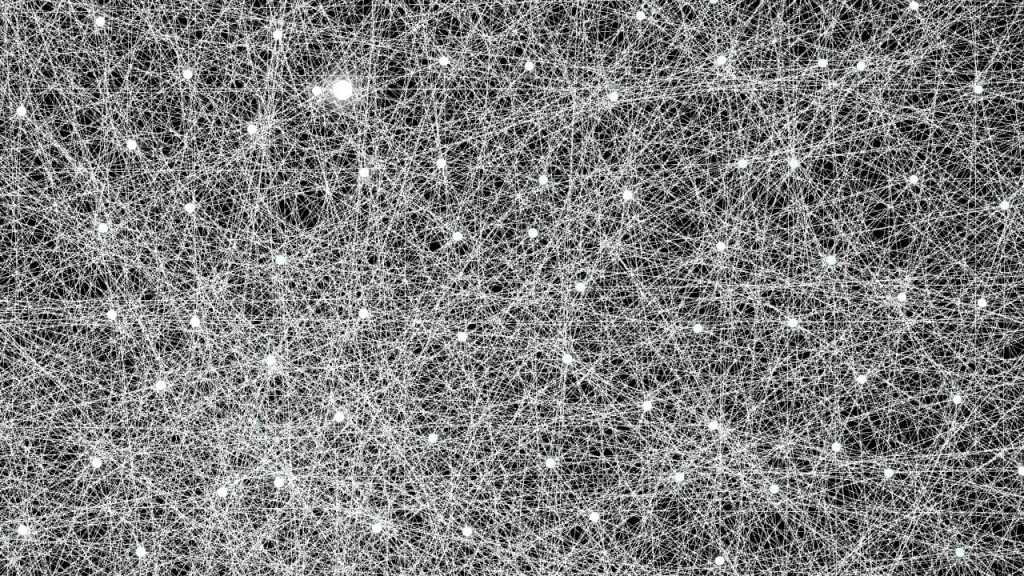
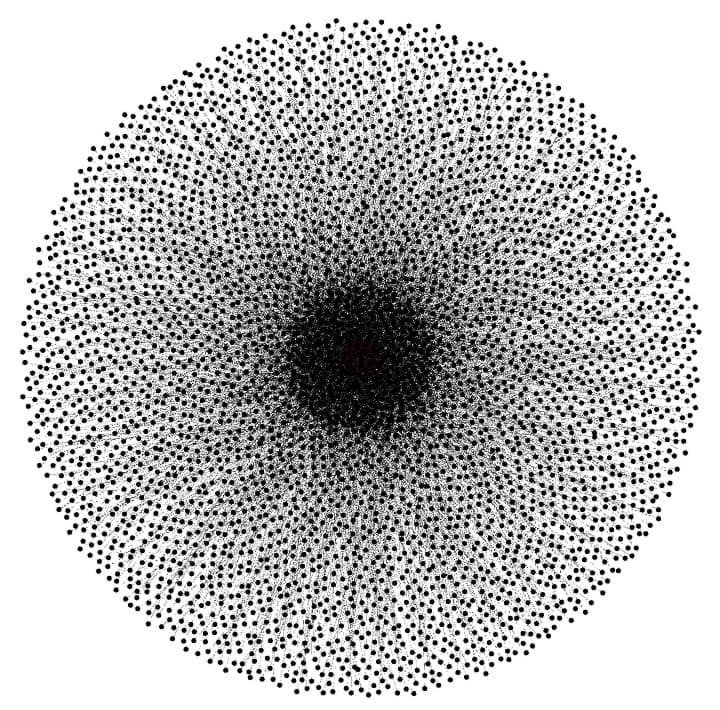
This project seeks to visualize not only the deterministic structure of a computational reality but also its underlying, emergent vibrancy. It models a universe as a Branchial Space of all possible states, then gives that space a “voice” through sonification. Finally, it uses that voice to create a feedback loop, causing the structure to resonate with its own sound. The result is a system where the fixed laws of causality coexist with a shimmering, probabilistic field—a visual analog to the concept of Quantum Foam.
The foundation of the system is abstract and rule-based, constructed using the NetworkX library in Python. A multiway system is initiated from a single hypergraph state (a simple triangle). This system evolves over several generations, following a deterministic rule to find all possible subsequent states. This branching evolution maps out the Branchial Space.
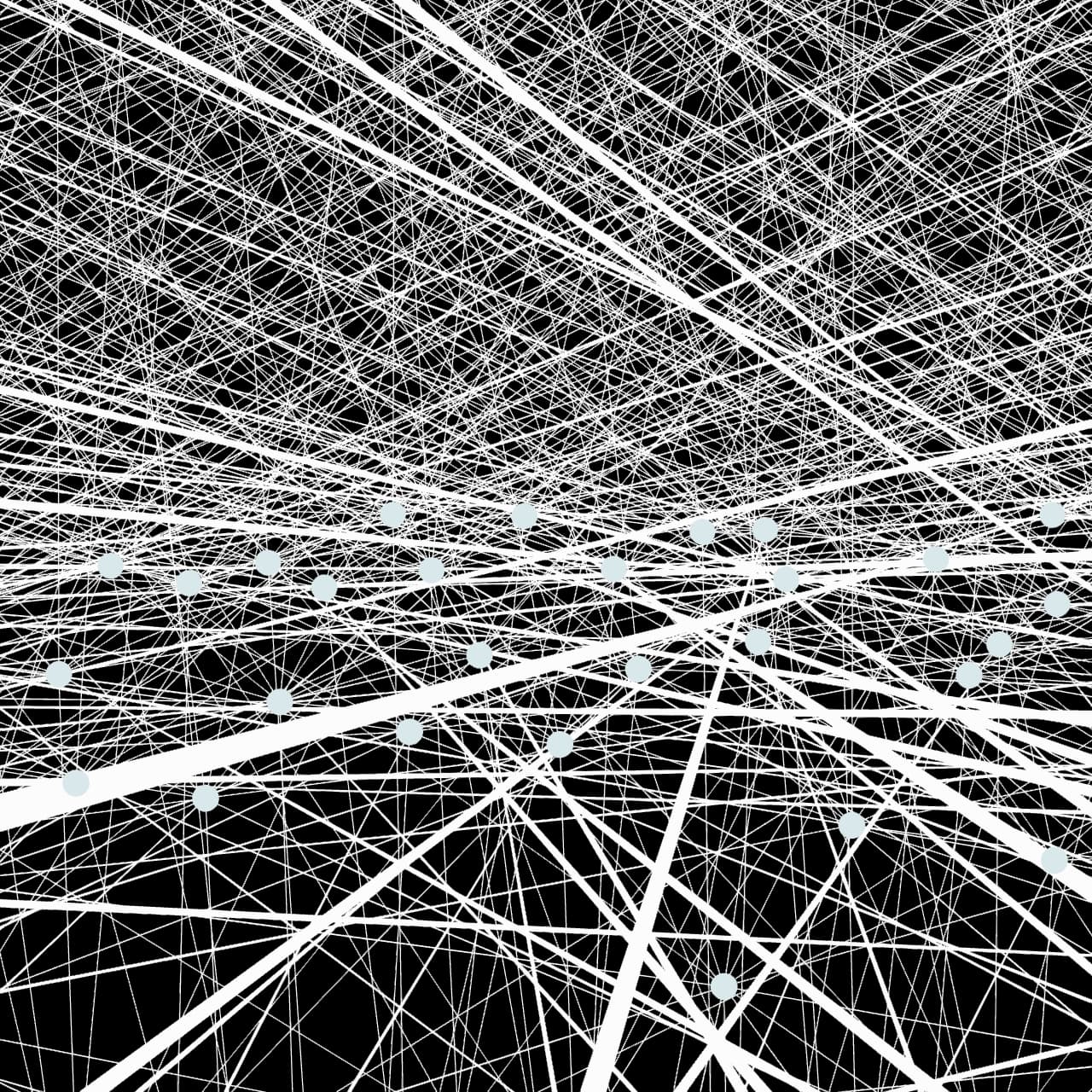
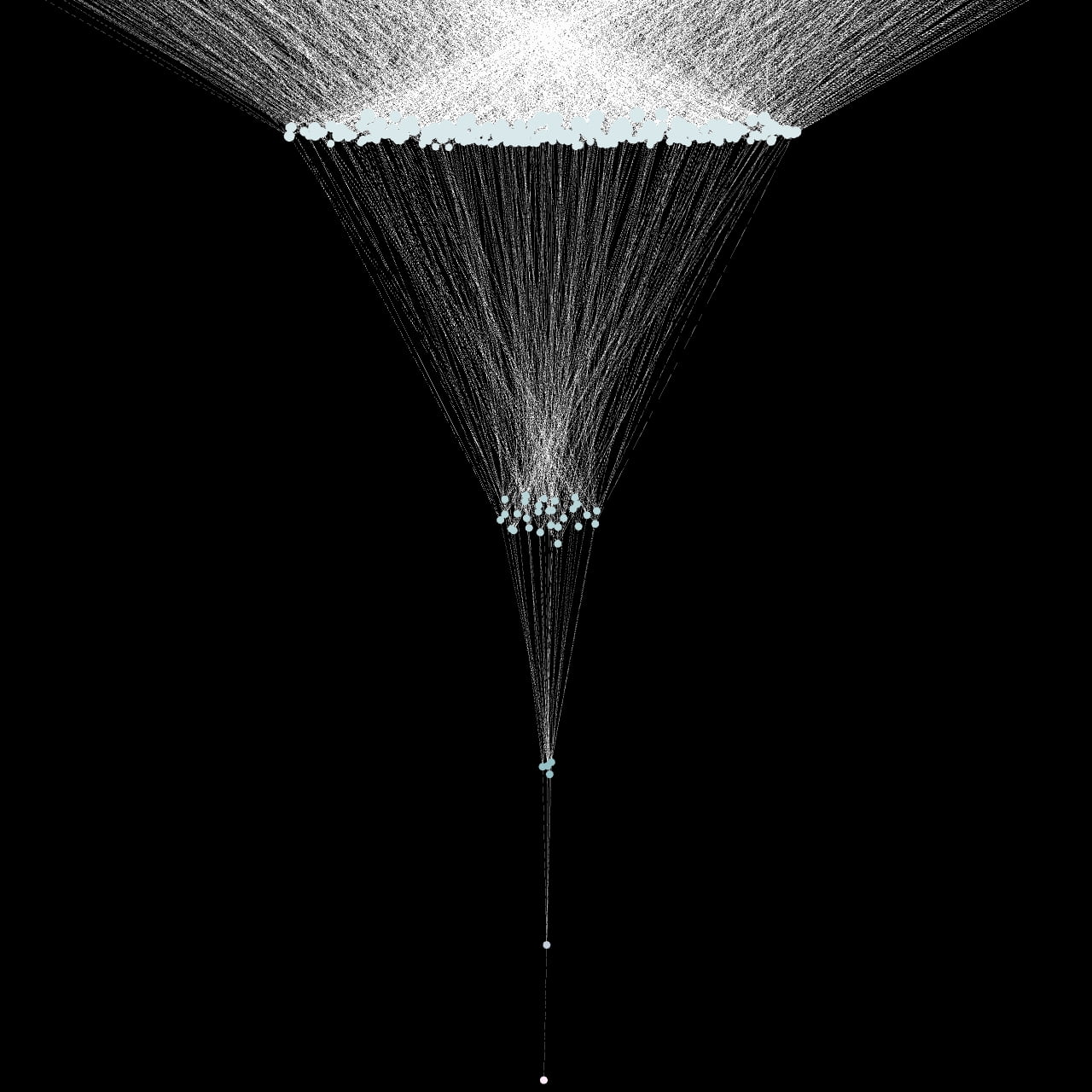

A whisper of ink, a name, a date, a place. This is the genesis of self in the eyes of the state. For his generative art piece, “Partida de Nacimiento,” artist Andy Serra deconstructs this very notion, questioning the power vested in a simple certificate. It is a quiet meditation on the paradox of a globalized world, where for many, the past is the only key to a future elsewhere. The work serves as a reflection on the cyclical nature of history.
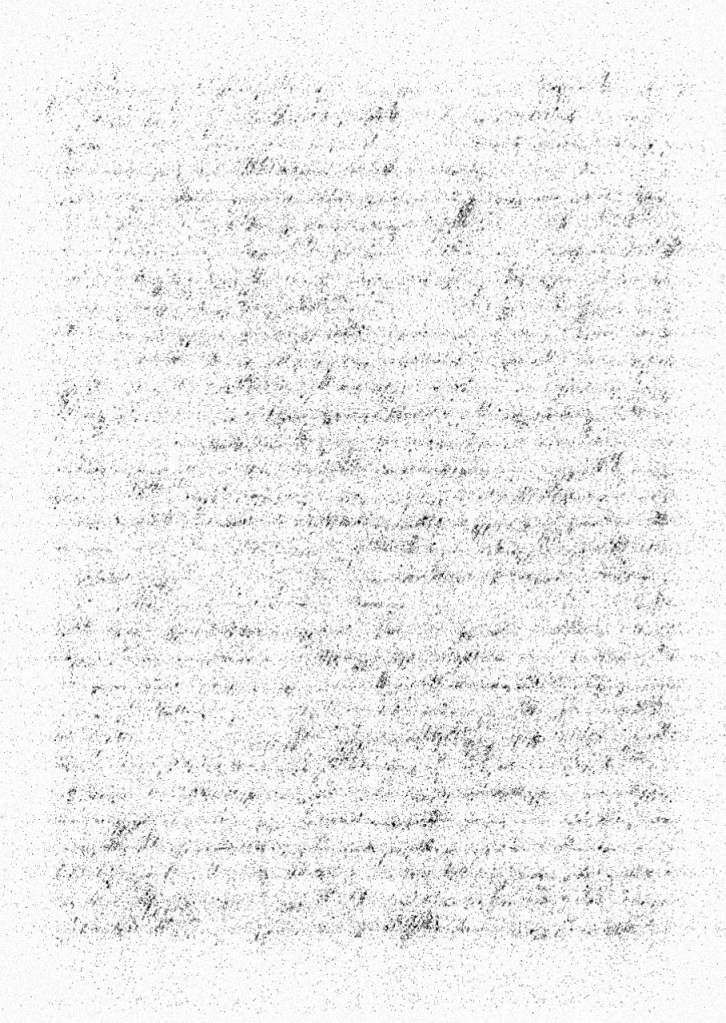
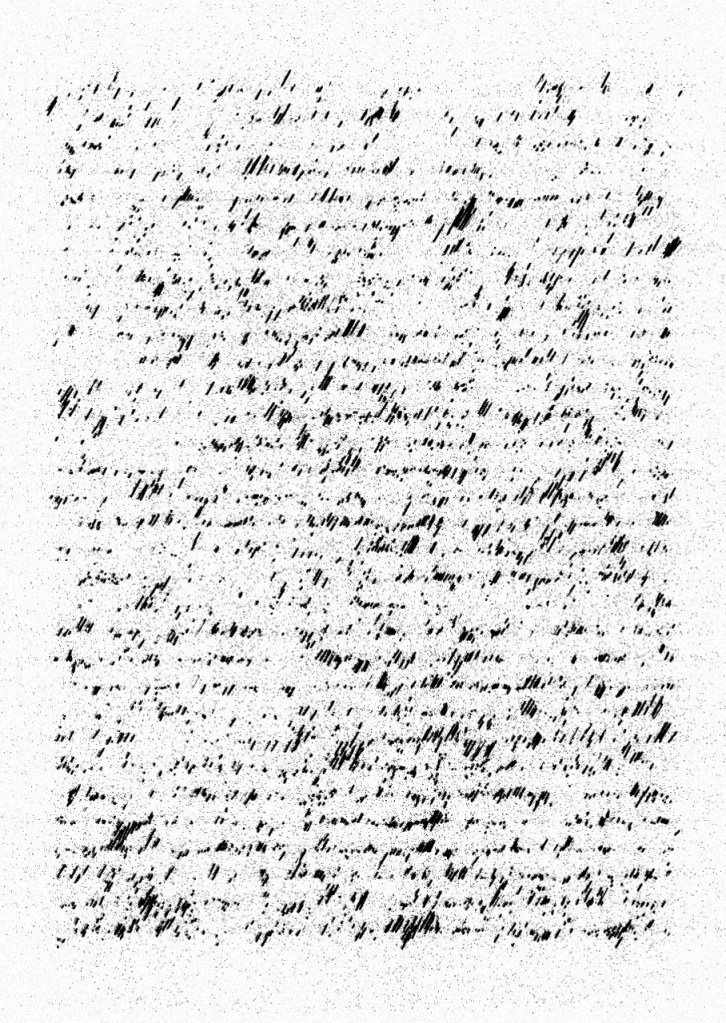
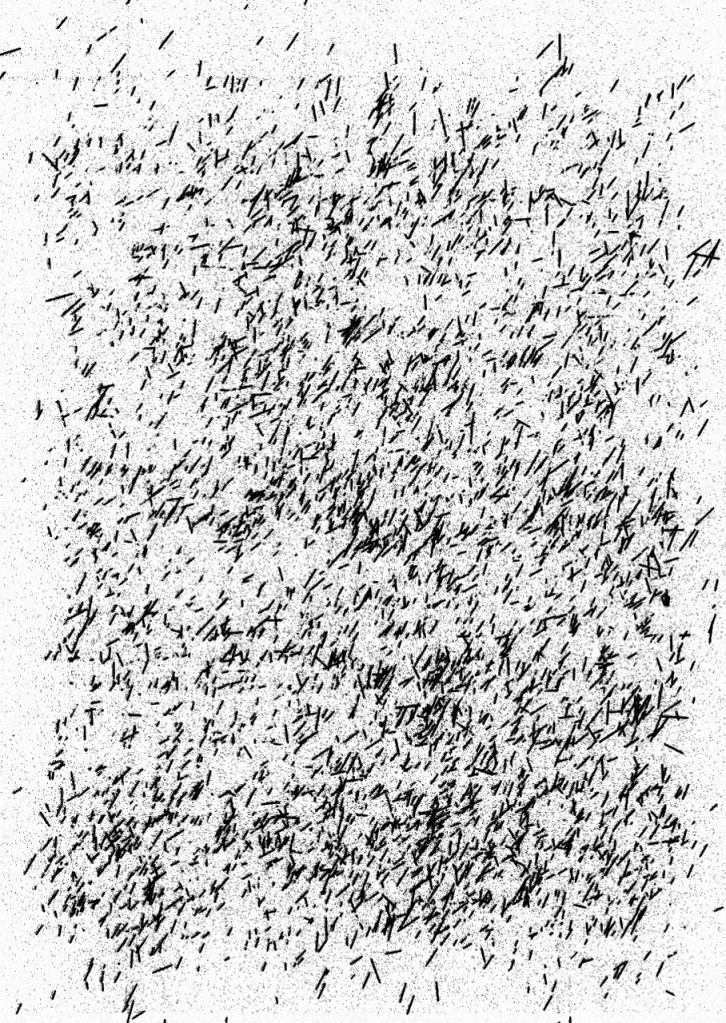
These are the words that suffocate the air
Code for this failed Hilbert cube using L- system:
context_ignore:F+-
premise:A

A(n) = B(n-1) + F - C(n-1) F C(n-1) - F - D(n-1) & F ^ D(n-1) - F + & & C(n-1) F C(n-1) + F + B(n-1)
B(n) = & C(n-1) F - D(n-1) ^ ^ - D(n-1) - F + & C(n-1) F + B(n-1)
C(n) = | D(n-1) | F ^ B(n-1) - F + C(n-1) ^ F ^ A(n-1) & & F A(n-1) & F ^ C(n-1) + F + B(n-1) ^ F ^ D(n-1
D(n) = | C(n-1) FB(n-1) - F+ B(n-1) | FAn-1) & F A A(n-1) & & FB(n-1) - F+ B(n-1) IF C(n-1)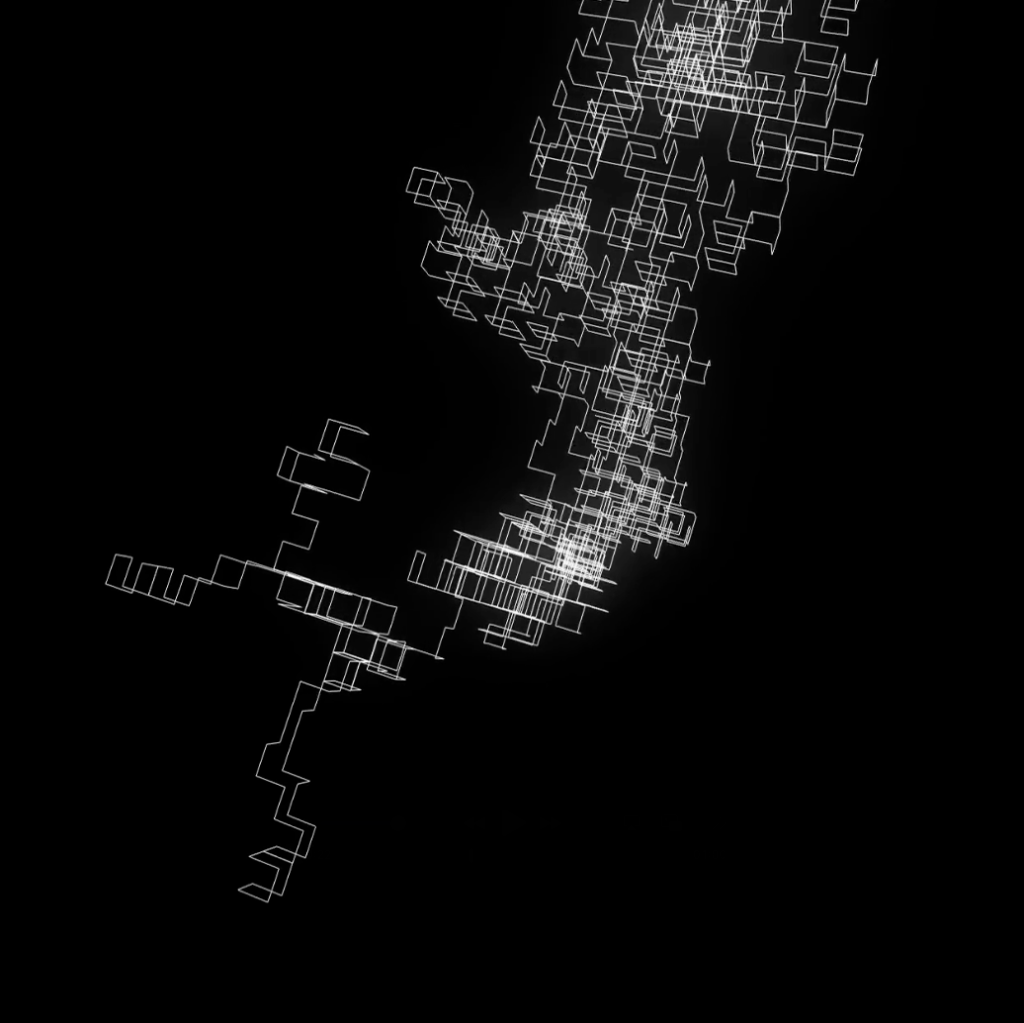


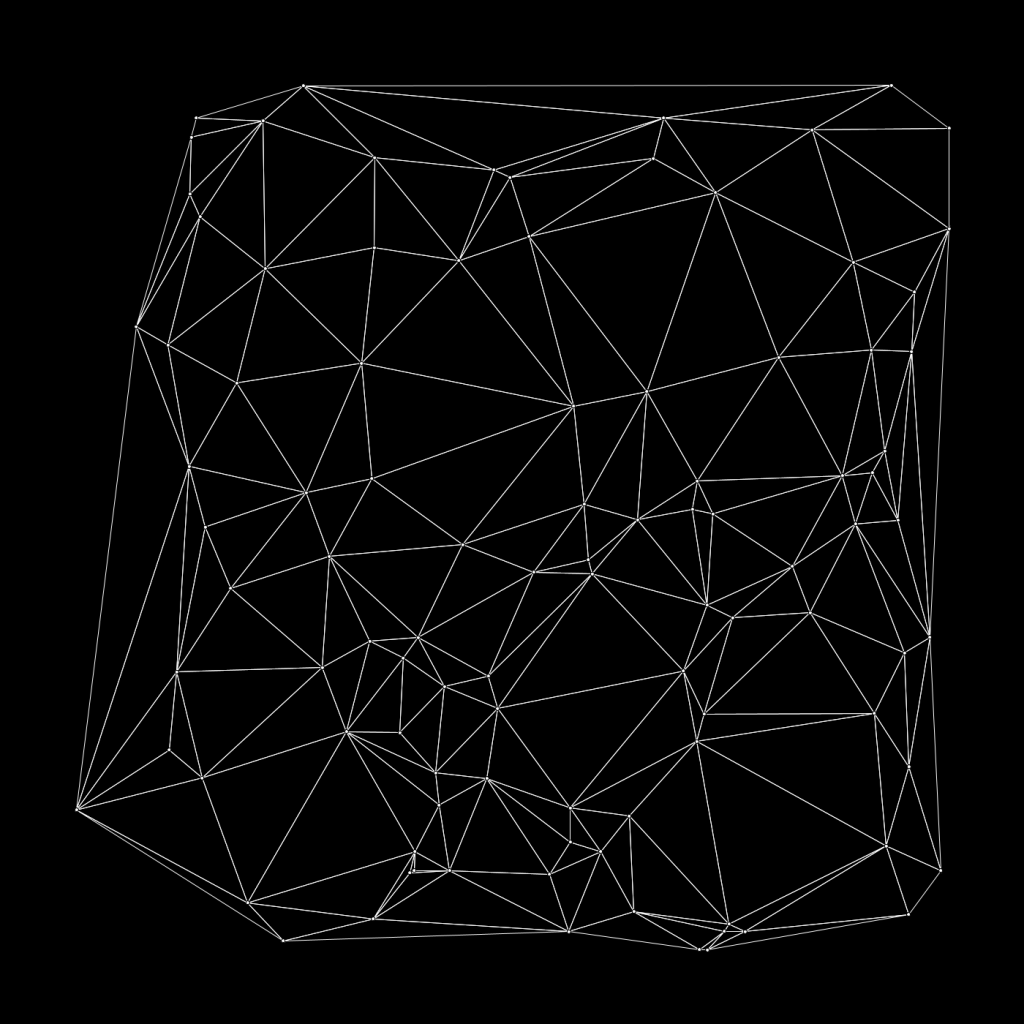
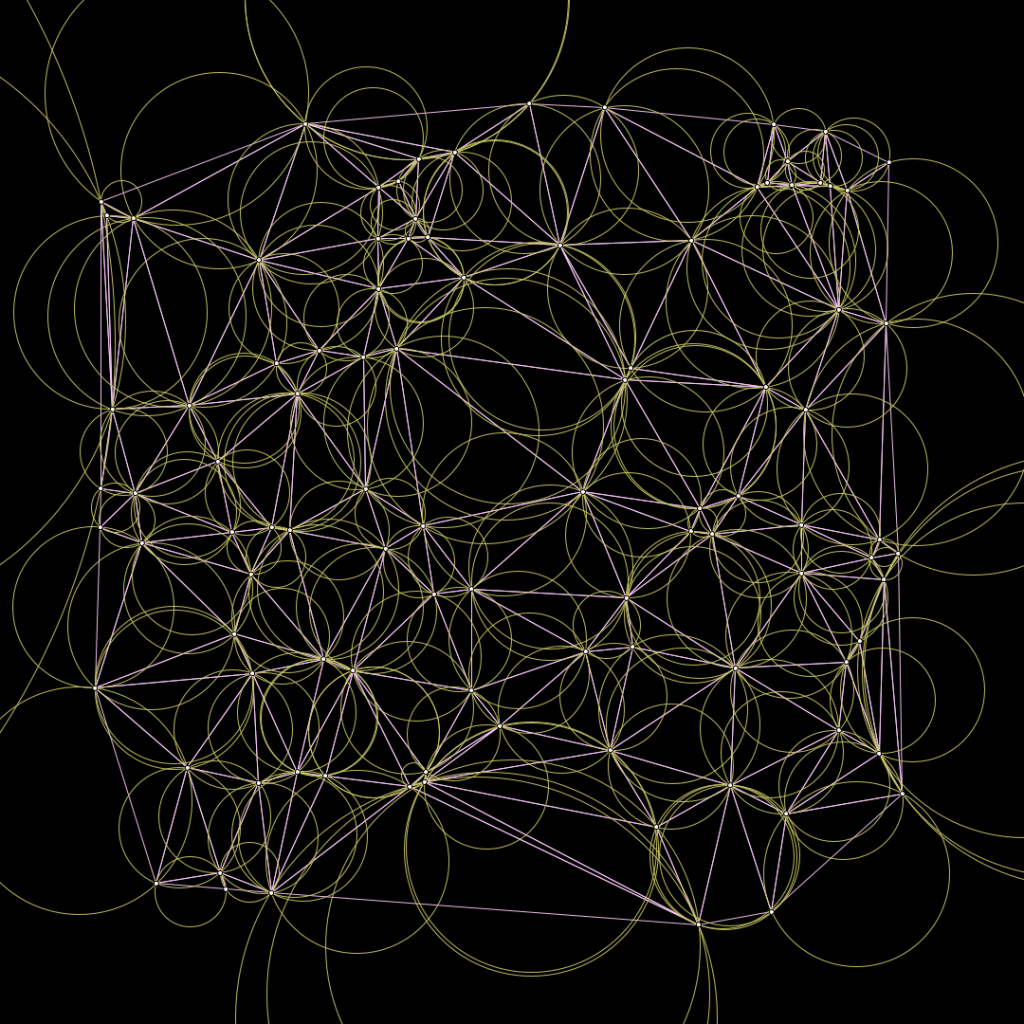
Math turns chaos into structure: first, random points connect, maximizing the minimal angle—Delaunay triangulation emerges. Then, the circumcenters appear, each obeying Delaunay’s golden rule: no point may trespass another’s domain. Finally, by linking these centers, the Voronoi diagram takes shape—a network of fluid, organic boundaries found in nature.
PJ5s code:
https://openprocessing.org/sketch/2694765

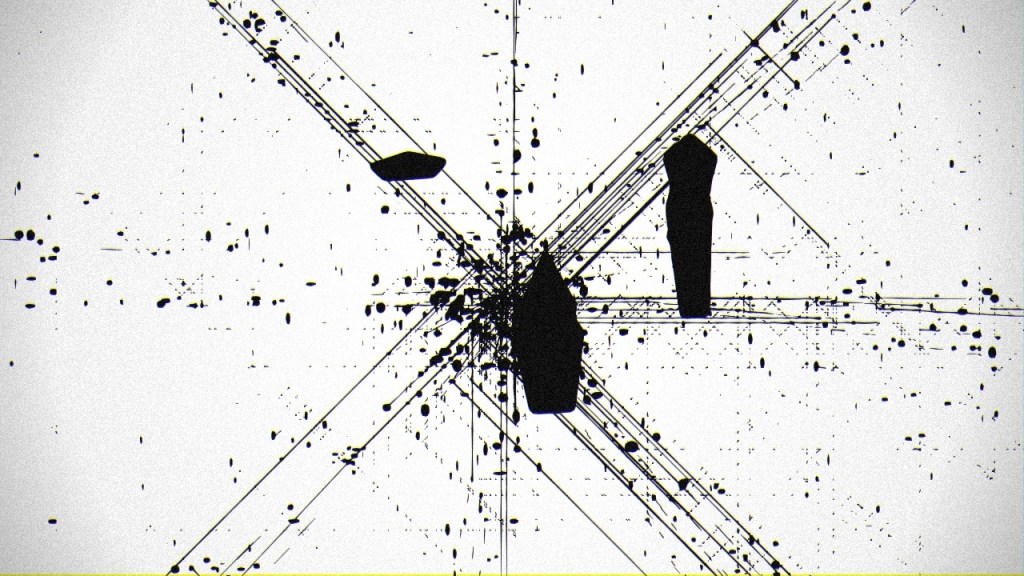
This project is a seed-based random determanistic installation designed for the generation of parametric geometric compositions all inter-connected. It explores the relationship between user input and algorithmic art, creating complex and repeatable visuals from a starting seed.

 Andrés Aguiló